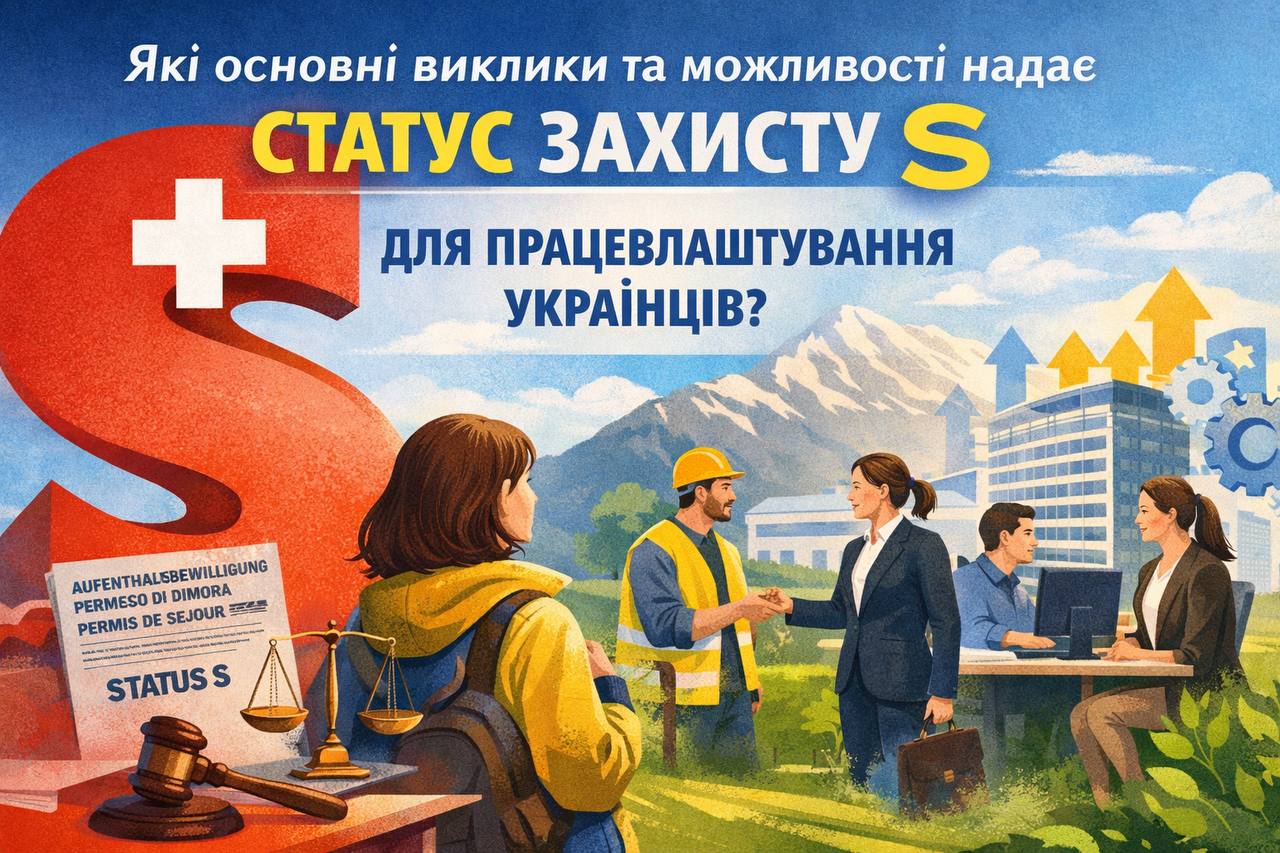
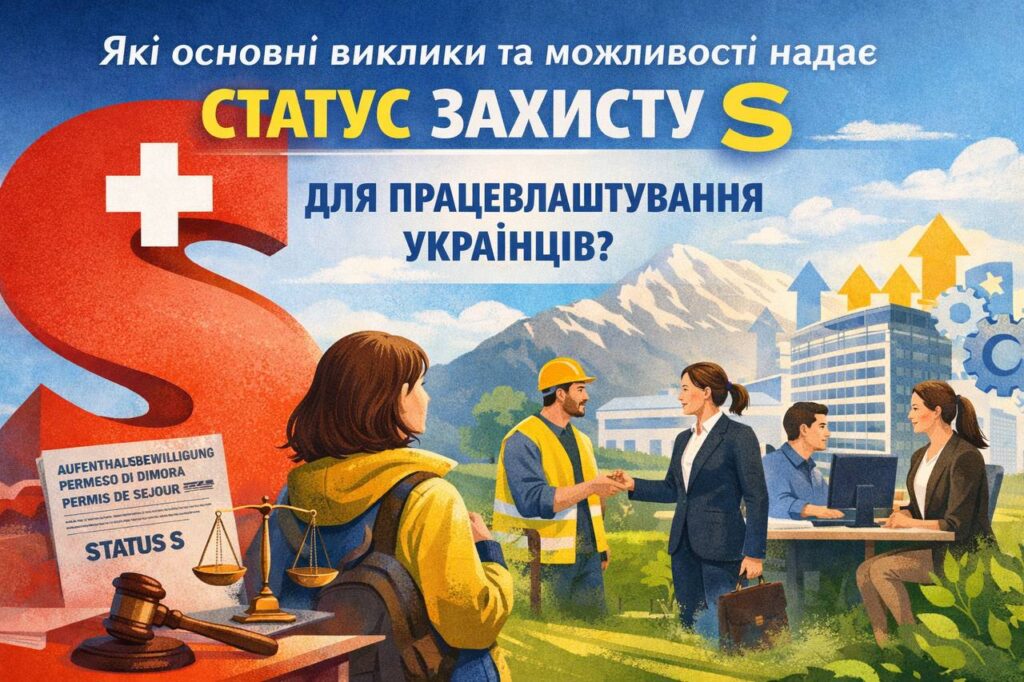
What are the main challenges and opportunities provided by the S protection status for the employment of Ukrainians?
The S status of temporary protection in Switzerland creates a unique environment for Ukrainians, which combines quick access to the labour market with deep legal and personal uncertainty. Below is a detailed overview of the main opportunities and challenges based on the sources.
Main features
• Instant access to the labour market and simplified procedures: Persons with S status have the right to work in Switzerland from the first day of their stay. An important innovation was the transition from the system of obtaining special work permits to declarative principle (Meldeverfahren). Now, employers simply need to notify the authorities about hiring an employee through the online platform, which significantly reduces the administrative burden and makes Ukrainians more attractive for quick hiring, especially for positions where staff are needed «yesterday».
• An extensive support system and specialised programmes: Ukrainians have access to assistance from regional employment centres (RAVs) and professional job coaches. There are specialised programmes for different categories:
◦ Integrationsvorlehre: preparation for vocational education for people aged 15 to 40.
◦ Powercoders: intensive courses (bootcamps) for entering the IT sector.
◦ Capacity: a programme for highly qualified specialists that helps to adapt their skills to the Swiss market.
• Investments in human capital: Switzerland sees the integration of Ukrainians as an investment. For those who successfully integrate, find a job and do not depend on social assistance, after 5 years, there is an opportunity to obtain a B residence permit, which will give them a real choice - to stay or return.
Key challenges
• Legal and strategic uncertainty: S status is temporary and return-oriented. Currently, it has been extended to March 2027, The lack of clear long-term rules prevents both Ukrainians from planning their lives and employers from investing in the long-term development of such employees.
• The problem of overqualification: Many Ukrainians have degrees or highly qualified qualifications, but due to complex and expensive procedures for recognising diplomas (especially in regulated professions such as medicine or law), they are forced to accept lower-level jobs. Employers are sometimes wary of hiring «overqualified» candidates, believing that they will be bored or leave quickly.
• Language barrier: Knowledge of the local language remains a key prerequisite for integration. Even in the IT sector, where English is often the working language, German is essential for social integration within the team.
• High competition and expectations: The Swiss labour market is very competitive, as many specialists from EU countries come here. Initial expectations that Ukrainians would immediately enter the labour market in large numbers proved to be too optimistic, as integration processes take time.
• Structural obstacles: The absence of modern family support policies (e.g., a shortage of places in kindergartens and full-day schools) creates additional difficulties for mothers who have to organise childcare on their own in order to be able to work.
The process of employment with S status can be compared to building a bridge in the fog: you have all the necessary tools and materials (work rights, government support), but you do not see the opposite shore (the future after 2027), so each step requires additional courage and caution.
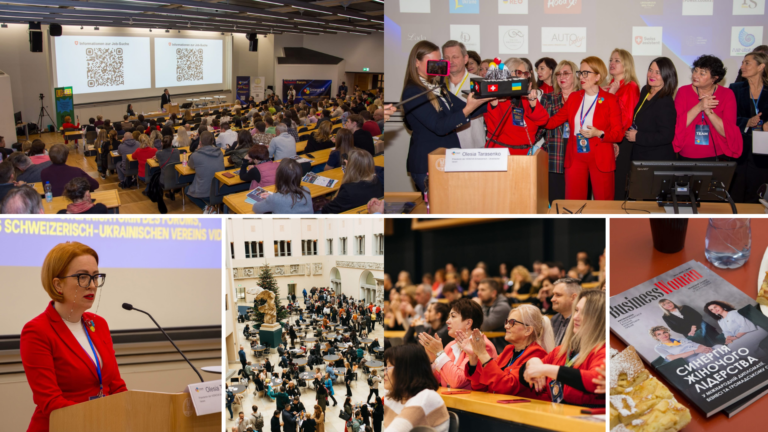
Source: Based on the results of the IntegraS 2025 forum, https://www.youtube.com/watch?v=7ps2ovyjYpo&t=6s
 Українська
  English (UK)
  Deutsch